TL;DR: On October 7, 2026, OpenAI began rolling out GPT-6 with Intelligent UI in ChatGPT: answers that arrive as charts, controls, calculators, and games. As a user, I want this. As a publisher, I’m worried the interface makes the source visit optional, citation or not. Pew’s March 2025 data already showed the pattern: users clicked a Google result in 8% of visits with an AI summary, versus 15% without. This post separates link, answer, and interface displacement, and lists what to test if you have access.
Oh, fellow writers and publishers, you’re not going to like this.
I really hope I’m wrong and someone finds a hole in my logic.
There’s a real chance I’m missing something. As I write this on October 9, 2026, I haven’t found another article making this particular argument.
So either people need more time to connect the dots, or I’ve connected dots that should have been left alone.
But until someone finds that hole, I’m worried.

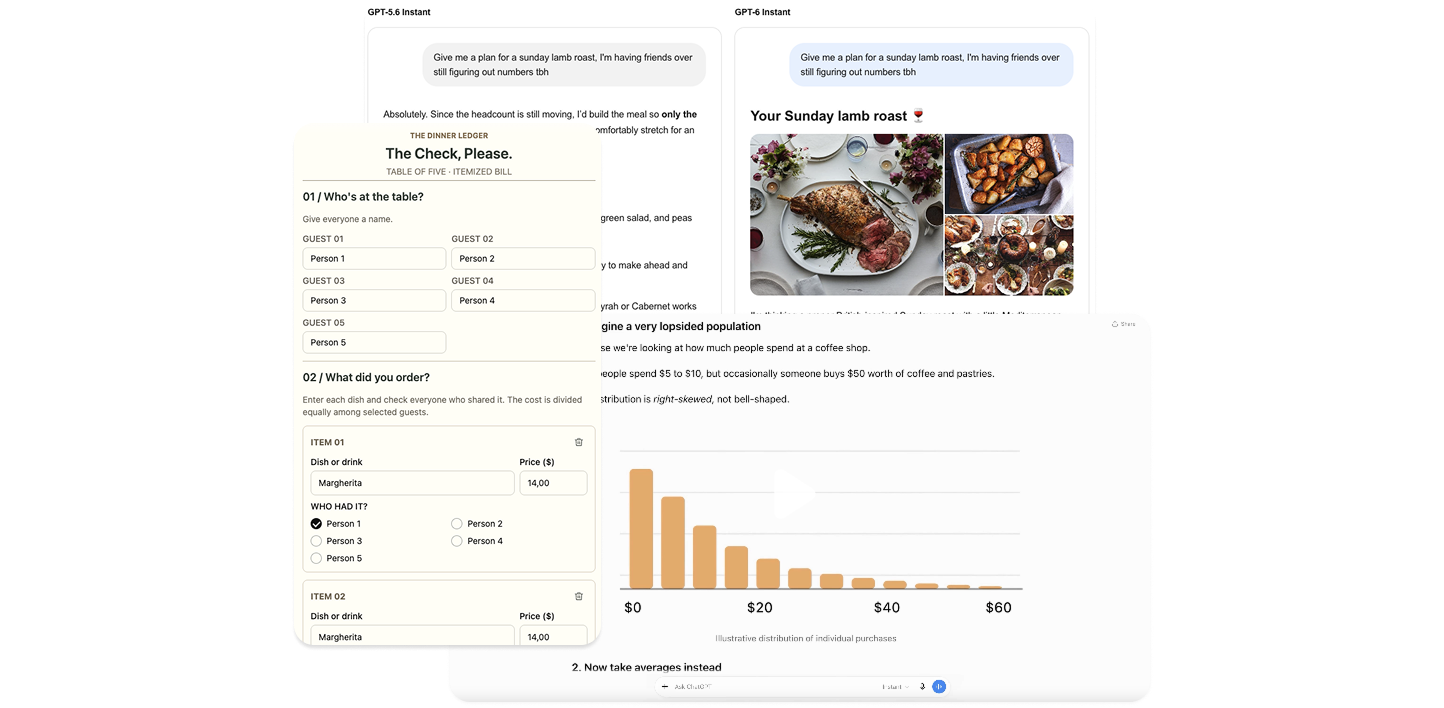
On October 7, OpenAI began rolling out GPT-6 with Intelligent UI in ChatGPT. We can ask a question, and the answer can include an interface: controls you adjust, interactive diagrams you explore, a calculator you use inside the conversation. Games.
Really neat. I want this as a user.
But as a writer and publisher, I want to know where the person who supplied the information appears.
My bet: this becomes one of 2026’s consequential shifts for publishing.
An AI answer can increasingly complete the task that used to link to and bring someone to our work.
When the Answer Becomes a Tool With No Link Back, There Is Nothing to Click
OpenAI trained GPT-6 to choose how to present an answer, including when plain text is enough. Its native components and compiler let the interface appear while the model generates it.
The Chat rollout began October 7 for Plus, Pro, Business and Enterprise, using Sol, with Free and Go following from October 8 using Luna. Enterprise access depends on admin settings. This release does not change the models in Work or Codex.
OpenAI describes the direction:
“Instead of people adapting to software, software will adapt to people.”
Imagine a Substack writer asking ChatGPT: “How many paid subscribers do Substack writers gain per month on average?”
ChatGPT probably doesn’t know the answer off the top of its head. It might search the web and find firsthand reports from writers who have shared their numbers.
If it retrieves those reports, the writers whose articles best answer the question may get cited and linked to. Some readers might click through. A few might even subscribe.
Now imagine the same question with interactive UI.
Instead of presenting the findings as text with links to the original sources, ChatGPT may decide a chart would be more useful. So it pulls the numbers into a ready-made comparison, showing how many paid subscribers different writers gain each month.
The reader gets the answer without opening a single article.
And if that chart doesn’t link back to your publication, there’s nothing to click. Your reporting helped create the answer, but the reader never saw your name, visited your page, or encountered your subscribe button.
Again, I’m hoping that I’m wrong about this and that someone from OpenAI will scream at me in comments.
Three Ways Publishers Lose the Visit: Link, Answer, and Interface Displacement
I see three separate ways publishers can lose the visit.
Link displacement: someone asks a chatbot instead of visiting a website or using a search engine. The journey to your publication never begins.
Answer displacement: someone searches, but an AI summary answers the question before they open a result. Your work might appear as a cited source.
Interface displacement: someone gets a usable tool that completes the task inside the answer. They change inputs, inspect the result and leave.
The bargain was already poor. In Pew Research Center’s study of 900 US adults, users clicked a Google search result in 8% of visits with an AI summary, versus 15% without. Just 1% clicked a link inside the AI summary.
The March 2025 data shows correlation, not causation, and tells us nothing about Intelligent UI.
But it gives us another reason to stop treating AI citations as a substitute for readers.
ChatGPT Citations Are Not Disappearing. Visiting the Source Is Becoming Optional.
Yes, I know a chart has room for a source link. So does an infographic.
“Generated” describes how the interface was made. “Retrieved” describes where its information came from. An answer can involve both.
But!
When I put myself in the user’s shoes, as those of us in product are rather inclined to do, the risk I see is simpler: a source can remain visible, while becoming less relevant (or not relevant) to completing the task.
This example is going to be a bit meta, but take the post you’re reading now.
Imagine someone asks ChatGPT: “What are people saying about OpenAI’s new Intelligent UI?”
ChatGPT could summarise the reactions in a chart. Let’s give it a hypothetical result: fewer than 1% of the responses it analysed raise concerns about writers and discoverability.
My post could be the source of that concern, with a link to my Substack included.
But why would that person visit my Substack now? They wanted to know what people were saying. They already have the chart and the summary.
OpenAI’s search documentation says responses using web search may include citations and that a Sources option is available in some responses. The Intelligent UI announcement does not explain how attribution works across its interactive formats.
There is already evidence that their presentation varies, even before the Intelligent UI was introduced. Search Engine Roundtable documented a version in August with source access inside a three-dot menu. Its September update also reported a treatment with Sources visible again on a free account. A universal, one-way disappearance would overstate those observations.
The Interface Decides Which Evidence Readers Encounter
If you’re a local journalist investigating school funding cuts, you probably spend weeks obtaining budget documents and interviewing teachers. Then publish which schools face cuts and what children will lose.
A parent asks ChatGPT which schools in their town are affected. It could use your reporting to build an interactive map. They select their child’s school, see the planned cut and have their answer.
Your article might be linked beneath the map. The parent could still finish without opening it. They may never discover that your publication covers their child’s school every week, or consider subscribing to support that work.
In my earlier article on getting cited in AI search, I separated mentions, citations, visits and subscribers. A citation beneath that map would credit your reporting. It would not tell you whether the parent noticed your publication, opened your story or subscribed.