10 Mistakes I Won't Repeat On Substack In 2026
After ten months on Substack, here are ten mistakes I wish I’d avoided. Free members can enjoy the first part now - and unlock the rest anytime.

10 months on Substack, 10 mistakes worth sharing.
I’ve talked about what worked.
Today, let’s cover what very much didn’t.

AI Product Manager, creator of StackShelf.app, Attitudevault.dev and a builder who believes progress starts with admitting what didn’t work.
If you’re new here, welcome! Here’s what you might have missed:
2025’s Most Absurd Product Decisions
I Analyzed Every Interaction From My First 6 Months on Substack - Here’s What Drove My Rapid Growth
#1 Underestimating Time Needed
When I started, I genuinely believed I could write a newsletter in 2 hours.
1 hour to research, 1 hour to edit. Nice and efficient.
Turns out 1 hour isn’t enough for either.
A single post takes me anywhere between 1 and 10 hours. Sometimes more, if the experiments take time.
And that’s just research and writing.
That's before Notes, images, SEO, comments, recommendations, repurposing, StackShelf, Attitudevault, likes, collaborations, and the thousand tiny tasks that only newsletter writers seem to know exist.
Substack isn't a lunchtime hobby. It's a small business with startup hours and intern pay.
#2 Not Willing To Admit That Engagement Matters To Me
When the money isn't there yet, something else has to keep us showing up.
For me, it’s the restacks and the comments. The little proof that someone out there is reading.
You can call it fuel, you can call it ego; either way, it's a dopamine shot that gets me through the after-work, after-kids-are-asleep, dishwasher-is-running writing sessions.
And pretending we don’t need it doesn’t make us noble, it just makes the work lonelier.
#3 Not Asking For Recommendations From Big Publications
I get it - asking for a recommendation is nerve-wracking, especially when it’s someone you truly admire.
It’s one of those moments when our imposter syndrome shows up louder than our logic:
The logic: everyone wants to grow on Substack. Everyone includes big publications. Which means there's a decent chance they'll be open to swapping recommendations (assuming you've already had a few positive interactions).
Imposter syndrome: You know they can see your subscriber count, right? Right?
Now, let’s look at the data: I’ve exchanged recommendations with 163 publications, minus the two authors who took the vow of digital silence.
That’s a 98.8% success rate. Even imposter syndrome must admit this is a risk worth taking.
#4 Waiting Too Long To Activate My LinkedIn Network
Imposter syndrome again: “You haven’t talked to these people in years. They don’t want newsletter spam from someone they met in 2008.”
So I waited. And waited. And then finally messaged my professional connections, everyone I thought might resonate with what I write, going all the way back to my first job at Nokia.
Within 2-3 weeks, my subscriber base almost doubled.
But that wasn’t even the best part.
Reaching out reopened communication channels with old colleagues and customers I hadn't spoken to in a decade. People replied with warmth, not annoyance. Many shared their own projects. I should've done it months ago.
#5 Subscribing to…Everyone
When I first joined, the whole “follow vs. subscribe” distinction went straight over my head.
So whenever I liked a post, I subscribed. Immediately. A polite reflex.
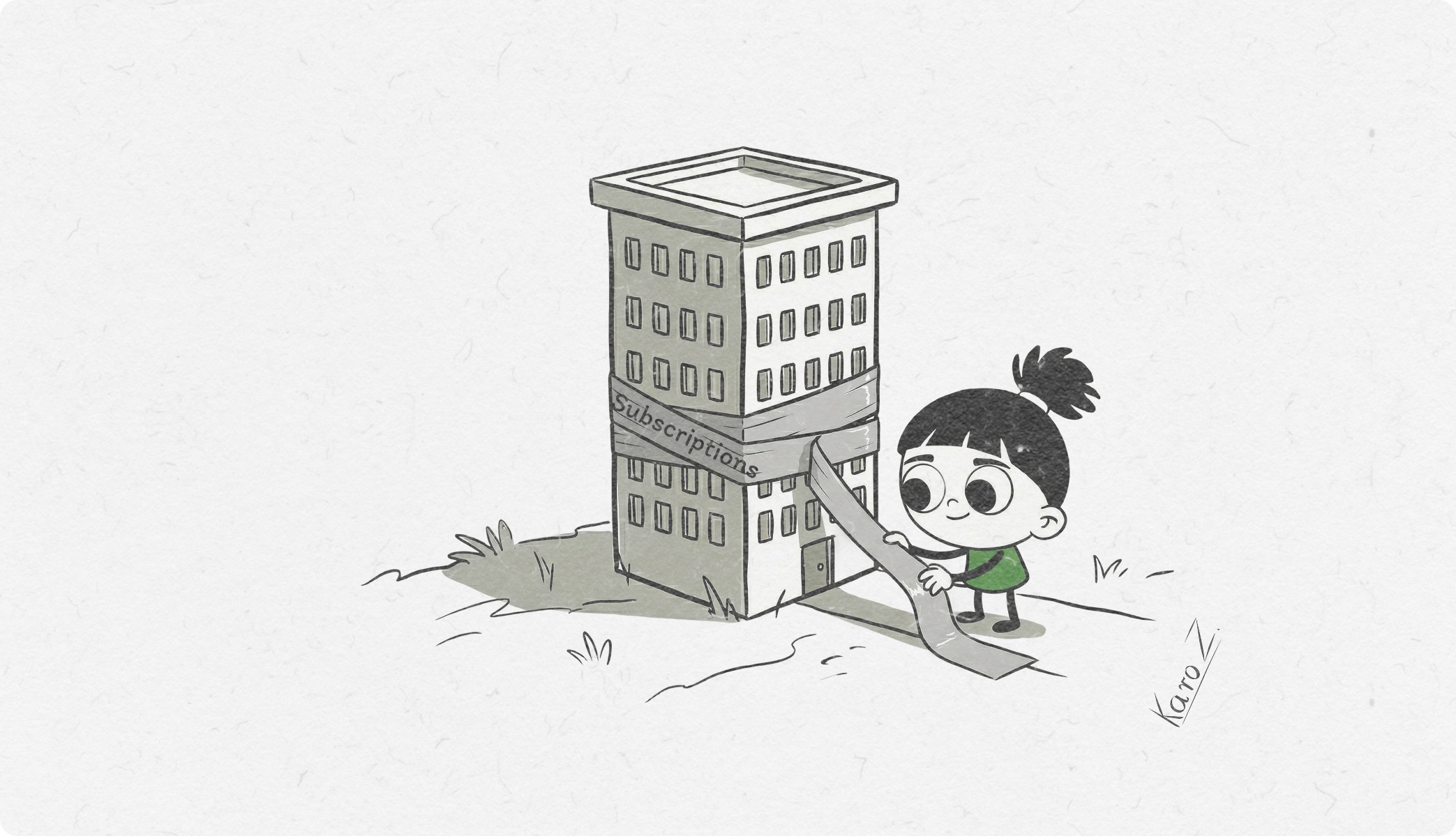
In no time, my subscription list grew so long it could wrap around the block twice.
Every month I tell myself, this is the month I clean it up. And every month I somehow leave with five new subscriptions. But January will be the month. I can feel it.